COP 17 marked the shift from recognizing the challenges to putting implementation to the test. The challenge now is to turn commitments into capacity for action, accessible finance and verifiable results across territories.
Ulaanbaatar consolidated several technical and institutional advances. However, the negotiations confirmed persistent differences over responsibilities, means of implementation, safeguards and accountability.
Beyond the negotiations, one message emerged clearly: faced with challenges of this scale, Africa no longer wants to be considered only as a vulnerable continent. It is a continent of solutions, capable of proposing its own models for restoration, resilience and sustainable development.
Africa is not asking only for more commitments. It brings solutions and calls for the financing, partnerships and capacities required to deliver lasting results on the ground.
Great Green Wall: from African ambition to investment
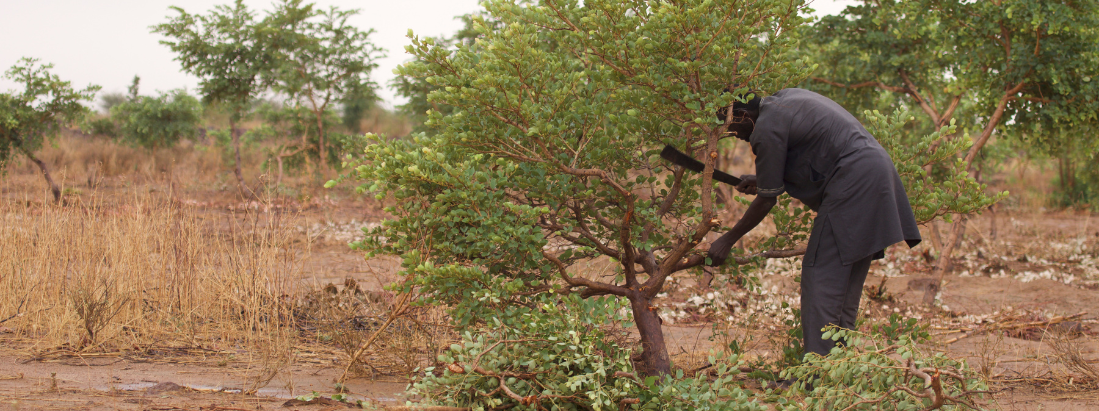
The Great Green Wall is one of the main tests of Africa's ability to turn a continent-wide political ambition into financed, executable territorial programmes. Scaling up will depend less on new announcements than on countries' ability to prepare coherent portfolios, allocate risks, mobilize appropriate financing and demonstrate lasting results across territories. From this perspective, the Forum planned for 2027 should be treated as a pivotal milestone that requires preparation now.
Drought: Africa calls for a stronger global response
Drought was the continent's other major priority. Particularly exposed to more frequent and severe episodes, African countries defended a common position aimed at strengthening the international drought response framework under the UNCCD.
COP 17 did not close the debate on the international architecture for drought response. The African Group continued to advocate a legally binding instrument, while differences persist over its scope, financing and implementation mechanisms.
The objective is to move beyond a predominantly reactive approach towards anticipatory and integrated drought risk management, closely linked to water and food security, land restoration and community resilience.
From data to investment
Data is not an end in itself. It becomes useful when it is validated at national level, translated into a diagnosis, used to define territorial priorities, and then integrated into investment preparation and monitoring. Along this chain, OSS's added value lies in its ability to connect knowledge, territorial decision-making, investment preparation, results monitoring and regional learning.
Land, water, climate and biodiversity: connecting the responses
Finally, Ulaanbaatar reinforced the need to move beyond sector-based approaches. Land degradation, drought, water stress, biodiversity loss, food insecurity and climate change often affect the same territories and the same people.
A common understanding of the territory should make it possible to align objectives relating to land, water, climate and biodiversity, while maintaining objectives and indicators specific to each Rio Convention. Rangelands, pastoral mobility, access to water and use rights must be fully integrated into this territorial approach.
An Africa that proposes, mobilizes and acts
COP 17 enabled the continent to advance a dual demand: strengthen international solidarity and mechanisms addressing desertification and drought, while giving African solutions greater means to work at scale.
The Great Green Wall is one of its most emblematic expressions. Born in Africa, led by the African Union and its Member States, and supported by the African Development Bank and international partners, it connects land restoration with investment, jobs, resilience and development opportunities.